

That is the honest answer, and it is one I give every homeowner who calls Webster Kitchen and Bath before committing to a project. Cabinet painting is one of the most cost-effective ways to refresh a kitchen without tearing everything out, but the results you get depend almost entirely on how the work is done - the prep, the products, and the hands doing the work. If you are weighing cabinet painting in Berks County and wondering whether it will hold up, this post walks through exactly what affects longevity, what finishes hold up best, and what you can do to protect your investment for years to come.
How Long Will Professionally Painted Cabinets Last?
Eight to fifteen years is a realistic range for professionally painted kitchen cabinets. That spread exists because a few key variables push results toward the shorter or longer end of that window.
What pushes longevity up
- Thorough degreasing and sanding before any primer touches the surface
- A bonding primer applied to bare or previously finished wood
- A hard, commercial-grade topcoat - not standard wall paint
- Careful application in controlled conditions (temperature and humidity matter)
- Light daily use and prompt touch-ups on any chips
What shortens the life of painted cabinets
- Skipping or rushing the surface preparation step
- Using interior latex wall paint instead of a cabinet-specific product
- High moisture exposure near sinks or dishwashers with no moisture-resistant primer
- Harsh cleaning products that break down the finish over time
- Heavy daily use with no periodic maintenance
When I walk through a kitchen for a free in-home consultation, the prep conversation comes first. A cabinet that was not degreased properly before painting will start peeling within a couple of years, no matter how good the topcoat is. That is not a scare tactic - it is just how paint adhesion works. The surface has to be clean, lightly abraded, and primed correctly for anything applied on top to stick for the long haul.
Homeowners across Wyomissing, Shillington, West Lawn, and the rest of Berks County have kitchens that were painted by the previous owners or by a handyman using the wrong products. Those are the jobs we often get called in to redo. Getting it right the first time saves you from doing it twice.
What Is the Most Durable Finish for Painted Kitchen Cabinets?
This question comes up on almost every consultation, and the answer has changed a bit as product technology has improved. Here is how the main finish types stack up for kitchen cabinets specifically.
Catalyzed conversion varnish
This is a two-part finish that cures through a chemical reaction rather than simple air-drying. It produces an extremely hard, moisture-resistant surface that holds up well to daily wiping, cleaning, and the general wear of a busy kitchen. The trade-off is that application requires proper equipment and ventilation - this is not a brush-on product for a weekend DIY project.
Waterborne alkyd (hybrid) finishes
Waterborne alkyds have become one of the more popular professional choices over the past several years. They clean up with water, dry relatively fast, and cure to a hard, enamel-like surface that resists yellowing and chips better than traditional latex. For most residential cabinet projects in Reading, Sinking Spring, Blandon, and the surrounding Berks County area, a quality waterborne alkyd is a strong choice.
Standard interior latex paint
Standard wall paint applied to cabinets is where painted cabinet projects go wrong most often. Even a premium latex wall paint stays softer than a true cabinet finish. It scratches, dents at the edges, and tends to feel sticky in humid summer weather - which is something Berks County homeowners deal with every July and August. It is not the right tool for the job.
At Webster Kitchen and Bath, we use products selected specifically for cabinet and trim work - not the same paint that goes on your walls. The finish selection is part of what separates a cabinet painting project that lasts a decade from one that needs attention in two or three years. You can read more about our process and what goes into a full project on our kitchen and bath remodeling guide.
Are White Cabinets Out of Style in 2026?
No - white cabinets are not out of style. They remain one of the most requested colors I see on consultations. What has shifted is the tone and the way white is being used.

Bright, cool whites were dominant for a long stretch and are still very popular, but warmer whites, soft creams, and greige tones have been taking over a lot of kitchens over the past couple of years. Homeowners in Douglassville, Exeter, Birdsboro, and West Reading who want a fresh look without going bold tend to land on something in the warm white to off-white range. It reads clean without feeling stark.
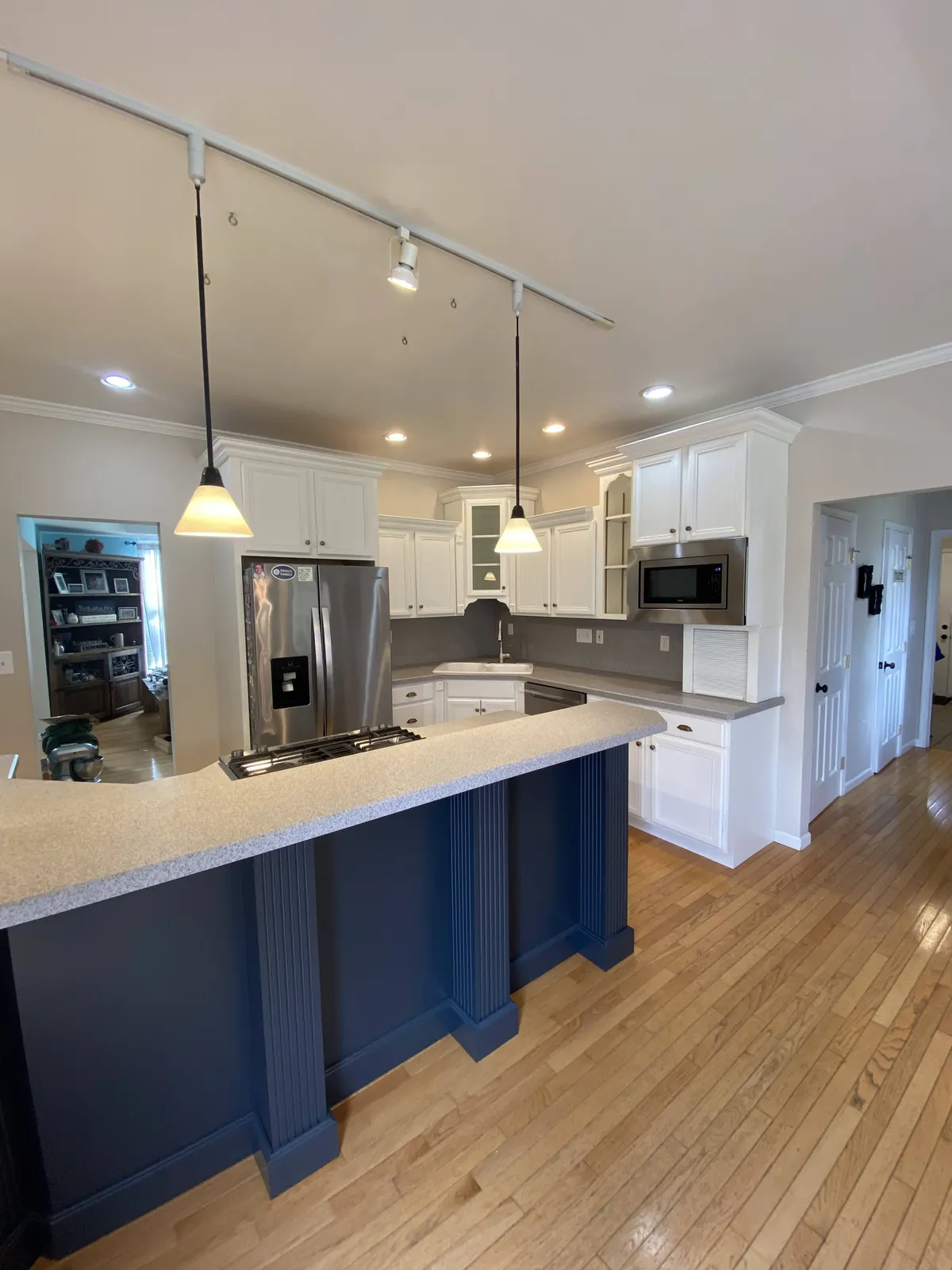
What we are also seeing more of is two-tone kitchens - lighter upper cabinets with a bolder lower cabinet color like navy, slate blue, or sage green. That approach adds visual depth and a lot of character without making the whole kitchen feel heavy.
The honest truth about color selection is that there is no wrong answer if the finish is done right. A well-applied navy on lower cabinets will look great for years. A poorly prepared white will look dated and dingy inside of three. The color matters less than the prep and the product.
Is Professional Cabinet Painting Worth It?
That depends on what your cabinets are starting with. Here is how I walk homeowners through that decision.
Good candidates for cabinet painting
- Solid wood or MDF cabinet boxes and doors in good structural shape
- Cabinets where you like the layout and door profile but want a new color
- Kitchens where a full replacement is not in the budget but an update is needed
- Homeowners preparing a house for sale who want a fresh, clean kitchen without a full gut
When painting is not the right call
- Cabinet boxes with water damage, warping, or structural failure
- Thermofoil doors that are peeling - paint does not adhere well to lifting thermofoil
- Cases where the layout itself is the problem (not enough storage, wrong configuration)
For homeowners who like their cabinet box layout but want a completely different door style - a shaker profile instead of flat-front, for example - cabinet painting and cabinet redooring can be done together. We replace the doors and drawer fronts with new ones in the profile you want, then paint everything to match. That gives you a kitchen that genuinely looks new without the cost of pulling out and replacing every cabinet box.
Professional cabinet painting in Berks County is almost always worth it when the cabinets themselves are in solid shape. The cost compared to full cabinet replacement is substantially lower, and the results - when done with proper prep and commercial finishes - hold up for years. The Webster Kitchen and Bath story is built around doing that kind of careful, lasting work for Berks County homeowners.
How to Make Your Painted Cabinets Last as Long as Possible
Once a cabinet painting project is complete, how you care for those surfaces makes a real difference in how long they stay looking sharp. A few practical habits go a long way.
Cleaning the right way
Mild dish soap and warm water is all you need for routine cleaning. Avoid abrasive scrubbers and stay away from products that contain bleach, ammonia, or strong degreasers. Those chemicals are hard on paint finishes over time and will dull the sheen and soften the surface.
Managing moisture
This matters especially in summer. Berks County summers bring real humidity, and kitchens near sinks and dishwashers see extra moisture exposure. Do not let wet cloths or sponges sit on cabinet surfaces or hang over door fronts. Run your kitchen exhaust fan when cooking to keep steam from settling on the cabinets above the stove.
Handling chips quickly
A small chip on a cabinet edge left unaddressed can let moisture under the finish and expand into a larger problem. Most professional painters will leave a small amount of touch-up paint for this reason. A quick repair done early keeps a minor issue from becoming a repaint job.
Respecting the cure time
Even after a paint job looks dry, most cabinet finishes take two to four weeks to reach full hardness. During that window, be gentle - avoid wiping aggressively or letting anything sit against the cabinet surface for extended periods. I make sure every homeowner we work with understands this before the project wraps up.
Frequently Asked Questions
How long will professionally painted cabinets last?
Professionally painted kitchen cabinets typically last 8 to 15 years when a qualified contractor uses proper surface preparation, a quality bonding primer, and a durable topcoat finish. Good daily care and quick attention to chips extend that range further.
What is the most durable finish for painted kitchen cabinets?
A catalyzed conversion varnish or a high-quality waterborne alkyd finish offers the best durability for kitchen cabinets. Both cure harder than standard latex paint and resist chips, yellowing, and moisture significantly better.
Are white cabinets out of style in 2026?
White cabinets are not out of style. Warm whites, soft creams, and greige tones are very popular right now, and two-tone kitchens pairing white uppers with bolder lower colors are trending across Berks County and beyond.
Is professional cabinet painting worth it?
Yes, when the existing cabinet boxes and doors are structurally sound. Professional cabinet painting costs considerably less than full replacement and can give a kitchen a fresh, updated look that holds up for a decade or more when done correctly.
How do I make painted cabinets last longer?
Clean with mild soap and water only, avoid harsh chemical cleaners, keep moisture away from door surfaces, and address any chips promptly with touch-up paint. Respecting the full cure time after a paint job - usually two to four weeks - also protects the finish long-term.
Does humidity affect painted kitchen cabinets in Berks County?
Yes. Summer heat and humidity in the Reading area can stress paint finishes, especially near sinks and dishwashers. A moisture-resistant primer and a hard, catalyzed or alkyd topcoat are essential in these areas to prevent soft or peeling finish over time.
What is cabinet redooring and how is it different from painting?
Cabinet redooring replaces the doors and drawer fronts while keeping the existing cabinet boxes in place, giving you a new door style and profile. Painting keeps the existing doors and updates the color. Both services can be combined - new doors in a new profile, all painted to match - for a kitchen that looks completely new without full cabinet replacement.