
How to Pick the Right Cabinet Paint Color and Finish for Your Kitchen
Start Here: Pick the Finish Before You Pick the Color
Most people open a paint fan deck and start picking colors. That is the wrong first step.
In Reading, most homeowners walk into a paint store, grab a fan deck, and start chasing colors before they have thought one second about finish. That order is backwards, and it costs people money every single time. The finish matters more than color. Much more. The same color looks completely different in satin versus semi-gloss, and sheen level changes how light hits the door and how deep or flat the color reads.
In a working kitchen, you have two options: satin or semi-gloss. Matte and flat finishes cannot hold up to grease, steam, and daily wipe-downs. Both wipe clean, shrug off steam and cooking grease, and keep their sheen through daily use.
Not sure which finish is right for your cabinet type? Webster Kitchen and Bath has worked on kitchens throughout Berks County and can answer that question in a single phone call. No obligation.
What Paint Finish Actually Holds Up in a Kitchen
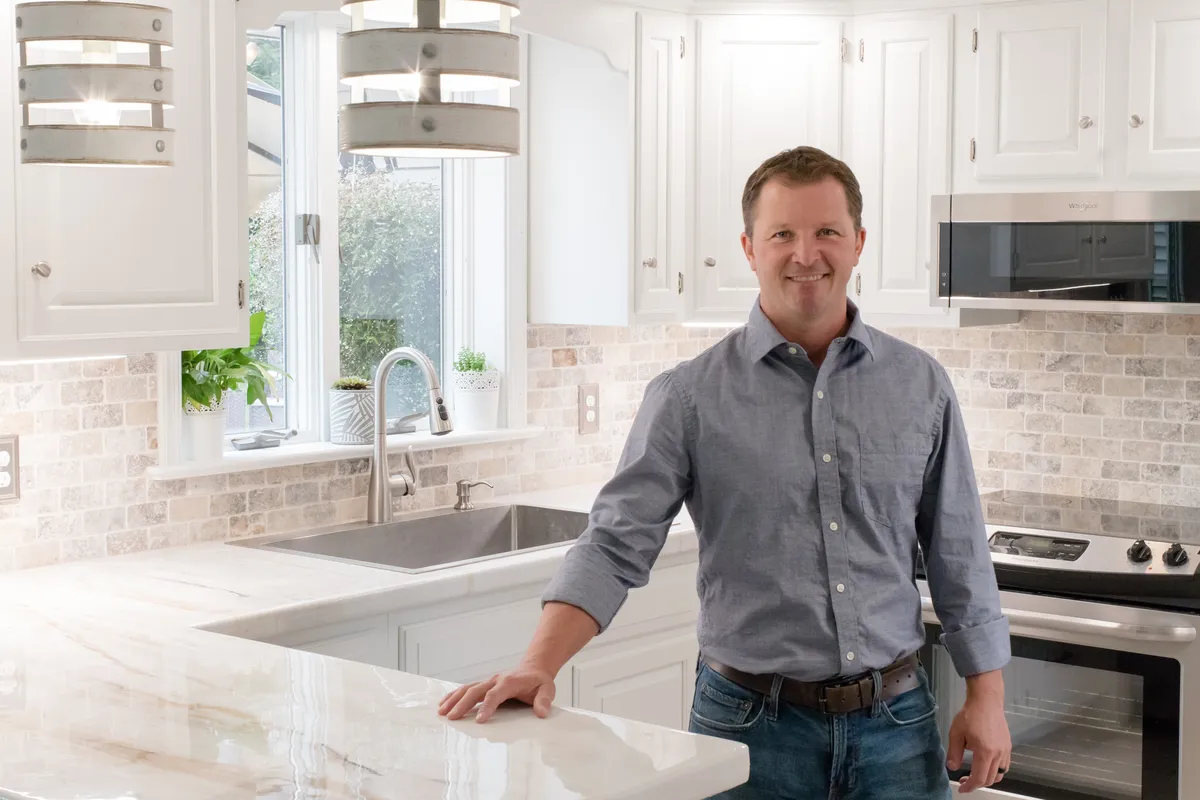
Finish is not a style choice. It is a durability choice.
Satin and semi-gloss are built for what kitchen cabinets face every day: grease, steam and repeated wiping. That is why we use them in kitchens and save the flatter sheens for rooms that stay dry.
Satin Finish
The right call for most kitchen cabinets. It cleans easily, handles scrubbing, and forgives older cabinet doors with small dings and grain variations. You have original wood cabinets in a Hampden Heights or Millmont row home? Satin. We recommend it almost every time.
Semi-Gloss Finish
Valid on newer, smoother boxes. It reflects light directly, which suits newer, smooth boxes and makes a crisp surface look sharp. On older wood that carries dents and past repairs, satin hides more and is usually the better match.
Matte & Eggshell Finish
Better suited to rooms that stay dry. In a kitchen, grease, steam and daily wiping call for satin or semi-gloss.
How to Match Cabinet Color to Your Countertops, Backsplash, and Walls Without Guessing
Stop looking at the dominant color and start looking at the secondary one.
Here is the trick that makes a kitchen pull together. Instead of matching the dominant color in your countertop or backsplash, pick up the secondary one. Cabinets chosen that way sit comfortably with everything around them.
That secondary color is your direction. Granite with warm brown or gold veins? Pull toward warm whites, creams, soft tans. Cool gray countertops or blue-gray movement? Cool whites and blue-green tones will sit right next to it.
Before committing, paint a sample board. Hold it against every surface. Check it in morning light and at night with the overhead on. Colors shift. What looks right at the paint store will surprise you in the actual kitchen.
If you are staring at countertops and backsplash tiles and cannot get the color to click, that is a conversation worth having before you buy anything. A quick look at what you are working with can save you a bad decision.
Should Cabinets Go Lighter or Darker Than the Walls, and Does Kitchen Size Change the Answer?
Yes, kitchen size absolutely changes the answer.
Small Kitchens
Lighter cabinets push the space open. Darker cabinets make tight kitchens feel like closets. Not opinion. Science. It happens every time.
Larger Kitchens
With decent light, you have options. Go darker on lower cabinets, keep uppers light. This two-tone approach works well in bigger spaces and adds visual weight without closing the room in.
Row Homes & Limited Light
Hampden Heights, Millmont, and West Reading border kitchens were built with one or two small windows. Sometimes north-facing, sometimes none. Generic suburban color advice does not apply here.
Know your kitchen. Actually know it.
Cabinet Colors That Are Working Well Right Now, and Which Ones Are Already Dated
Pick a direction that will still feel right in ten years, not one that was trending last year.
Warm Whites & Off-Whites
Still the safest call. They photograph well, work with almost any countertop, and do not scare buyers if you sell in five years. This is not boring. It is just true.
Soft Greens & Muted Sage
Holding strong. Current without being loud. These are the colors that still look right years after the job is done.
All-Gray & High-Contrast Black
Already tired. All-gray peaked years ago and is declining fast. High-contrast black in small kitchens is in the same boat. Sharp in photos. Does not age well. Dark finishes close tight spaces down.
Why a Color Chip Never Looks the Same at Home
A 2-inch chip under store lighting is a starting point, not an answer. Your kitchen's light is what decides how a color reads.
Store lighting and kitchen lighting are two different things. See the color in the room it is going to live in, at the times of day you actually use the kitchen.
Check it in the morning. Check it in the afternoon when the sun shifts. Check it at night under your kitchen fixtures. The color will look noticeably different each time. Warm cream at noon becomes almost yellow by evening, and that two-day test saves you from an unexpected full repaint.
If you have done the sample test and you are still not sure what you are seeing, that is worth a second set of eyes. We have looked at a lot of kitchens in this city and can usually tell you in five minutes whether a color is going to work.
Why Older Reading-Area Cabinet Boxes Are Worth Painting, If You Do It Right
The bones are good. The prep work is what makes the difference.
Many homes near the Goggle Works and Penn Street corridor were built between 1940 and 1960, and cabinet boxes from that era were solid wood. Builders did not cut corners on material thickness. We have painted hundreds. They are solid.
A structurally sound original cabinet does not need replacement. Well-prepped paint transforms kitchens at a fraction of full replacement cost. The box stays. New life begins.
Frequently Asked Questions About Kitchen Cabinet Paint
Questions we hear from Reading homeowners before they start a cabinet painting project.
Do I really need to sand cabinets before painting them?
Yes. Scuff sanding gives the primer and paint something to grip, and it is one of the steps that decides how the finish holds up. Every cabinet project we do includes a thorough degrease and sand before any primer goes on.
Can I use regular wall paint on kitchen cabinets?
No. Wall paint is not built for the abuse cabinets take. You need a paint formulated for trim or cabinetry. These cure harder and hold up to scrubbing. Using wall paint on cabinets is a short path to a sticky, scratched-up surface.
How long does cabinet paint need to cure before I can use the kitchen normally?
Paint dries fast. Curing is slower. A painted finish can look dry in a few hours but may not be fully hard for several days. During that time, go easy. Wipe gently. Do not stack items against freshly painted doors. Rushing this causes marks and dents that will not buff out.
Does the color I pick affect resale value?
Yes, but not the way most people think. Buyers are not looking for a color they love. They are looking for a color that does not bother them. Neutral warm whites and soft naturals keep you safe. Bold or highly personal choices narrow your buyer pool.
Is it worth painting cabinets in a rental or a house I plan to sell soon?
Depends on the current condition. If the cabinets look dated or worn, a fresh coat in a neutral color adds real value at low cost. If they are already in decent shape, focus your money elsewhere. Paint does not cover structural problems, warped doors, or broken hardware. Fix those first.
What is the best primer for kitchen cabinets?
A bonding primer is usually the right call, especially on older wood or if you are covering a dark existing color. Oil-based primers give a harder base but have strong fumes and longer dry times. Water-based bonding primers have improved a lot and work well in most situations. Ask your paint supplier what they stock for cabinet work specifically.
If You Are Dealing With This in Reading, We Can Help
A quick conversation about your kitchen is usually all it takes to narrow the choice down.
We work kitchens across Berks County every week. We know how the light shifts differently in a Charles Street twin than it does in a newer build out toward the Antietam area. We know which primers stick to the wood in older Hampden Heights row homes, and we know which finishes hold up through Reading winters without cracking at the seams.
The two-day sample test does its job when the prep and the finish are right behind it. Those are the pieces we sort out with you before any paint is ordered.